



H2S Training in Louisiana, Colorado, North Dakota, Oregon, Washington, Texas, and Nationwide
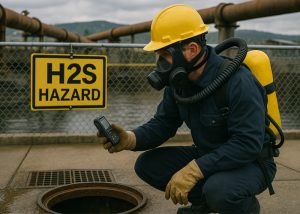 The first time someone hears about hydrogen sulfide on the job, it usually comes with a warning. This invisible gas does not give second chances, which is why H2S training matters so much, especially for those working in confined spaces or other environments where exposure risks are very real.
According to OSHA, the permissible exposure limit (PEL) for H2S is 20 ppm, which means that exposure at or above this level is considered dangerous. At this concentration, you may experience irritation, dizziness, or nausea, and prolonged exposure can quickly become life-threatening, as was the case in a 2023 tragedy in Bastrop County, TX.
A group of hog hunters in Texas tragically lost their lives after entering an underground cistern filled with hydrogen sulfide gas while trying to rescue a trapped dog. Unaware of how quickly the toxic environment could become fatal, the 3 hunters entered the cistern and all lost their lives due to overwhelming gas exposure.
For those working in confined spaces or hazardous environments, the presence of gases like H2S makes these risks even more immediate and far more likely to occur without proper training and precautions.
The risks are real, and that is why H2S training is more important than you might think. But what does the H2S training curriculum really cover? Here are the core themes:
Chemical Properties of Hydrogen Sulfide
At the foundation of any H2S training curriculum is understanding what hydrogen sulfide actually is. This helps you recognize how quickly this gas can spread, settle in low-lying areas, and become dangerous without warning. A grasp of its behavior helps turn uncertainty into awareness.
Exposure Limits and Risk Levels
Another critical part of hydrogen sulfide certification details is learning about exposure thresholds, including OSHA-defined limits like permissible exposure levels and immediately dangerous to life or health conditions. OSHA defines these limits as:
- OSHA PEL- 20 ppm ceiling
- IDLH- 100 ppm
Detection Equipment
You cannot rely on your senses alone. That is why what is taught in H2S training includes how to properly use gas monitors and detection systems. Workers learn how to trust their equipment, interpret readings, and act quickly when levels rise.
Respiratory Protection
H2S training walks through the selection and use of respiratory protection, helping workers understand when basic protection is enough, and when more advanced systems are required.
Emergency Response Procedures
When something goes wrong, hesitation can be costly. H2S training curriculum prepares you to respond immediately, whether that means evacuating, assisting others, or following site-specific emergency protocols.
Confined Space Considerations
In confined spaces, hydrogen sulfide becomes even more dangerous. Training addresses how gas can accumulate in these environments and what extra precautions must be taken before entering.
This 120-minute online course can save your life! But certification does not last forever. Annual H2S refresher training is required to keep up on certification and essential safety education. The refresher course aligns with standards laid out in OSHA 29 CFR 1910.143 and OSHA 29 CFR 1910.120 and ensures that your knowledge stays sharp, relevant, and ready to be applied in real-world situations.
At HAZWOPER Center, we proudly offer life-saving H2S training to Louisiana, Colorado, North Dakota, Oregon, Washington, Texas, and throughout the nation with online training. Available in individual and group courses, we arm you and your team with the knowledge you need to act with confidence when faced with H2S exposure.
Since 1993, our Certified Safety Professionals have helped workers across the nation gain the valuable knowledge they need to stay safe on the job. Contact us today to enroll in H2S training or learn more about other workplace educational courses.